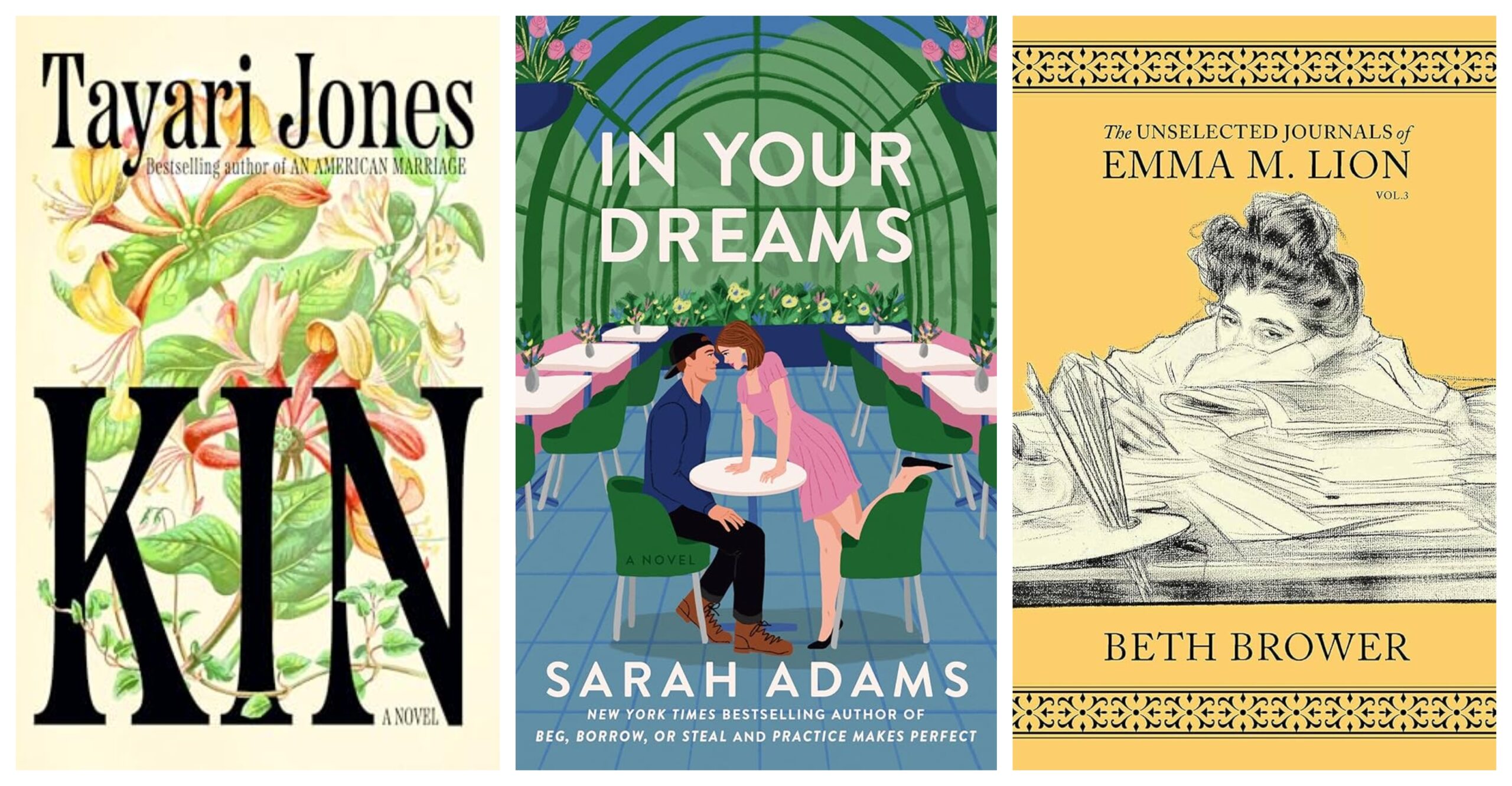
Kin by Tayari Jones (★★★★☆)
Print • Owned (Target) • Historical Fiction • 2026
Short synopsis: In the wake of their mothers’ absences, two best friends from small-town Louisiana follow dramatically different paths—one into privilege and power, the other into a dangerous search for belonging that could cost her everything.
This book was a masterclass. The writing was so beautiful that I kept stopping to reread certain lines because they took my breath away. (Something that has never happened to me before!) Jones did such an incredible job immersing me in the world of Niecy and Annie, and there was such a strong sense of place, no matter where the girls were living—their hometown in Louisiana, Spelman College, or a farm being run as a brothel. The characterization was especially strong, and even when the characters frustrated me or made choices I didn’t love, I was still totally invested in them because Niecy and Annie felt so real and fully formed. That said, there is just something holding this back from being a 5-star read for me. I can’t even fully explain what it was, just that I felt like something was missing for me emotionally. Still, it was an exceptional read, with so much to say about family, sisterhood, and being a Black woman in the Jim Crow South.
In Your Dreams by Sarah Adams (★★★☆☆ 1/2)
E-Book • Libby • Contemporary Fiction • 2025
Short synopsis: When a burned-out chef returns to her Kentucky hometown to help open a farm-to-table restaurant with her brother’s best friend, long-buried feelings, family tension, and second chances force them both to decide whether love is worth the risk.
The Unselected Journals of Emma M. Lion, Vol. 3 by Beth Brower (★★★★☆)
Audiobook • Hoopla • Historical Fiction • 2020
Short synopsis: The third volume of Emma’s journals follows our delightful protagonist as she teams up with her cousin Archibald for the annual Julius Caesar scavenger hunt.
This is the first full-length novel of the Emma M. Lion series, and I had the best time with my new BFF. The scavenger hunt was hysterical and Emma’s insights into this weird world were a delight to read. There is a romance brewing in Emma’s world, and it gives me butterflies! I continue to adore this series and while I’m going to take a little break from it to listen to a few other audiobooks in my queue, I’m so looking forward to picking it back up soon!
What are you reading?