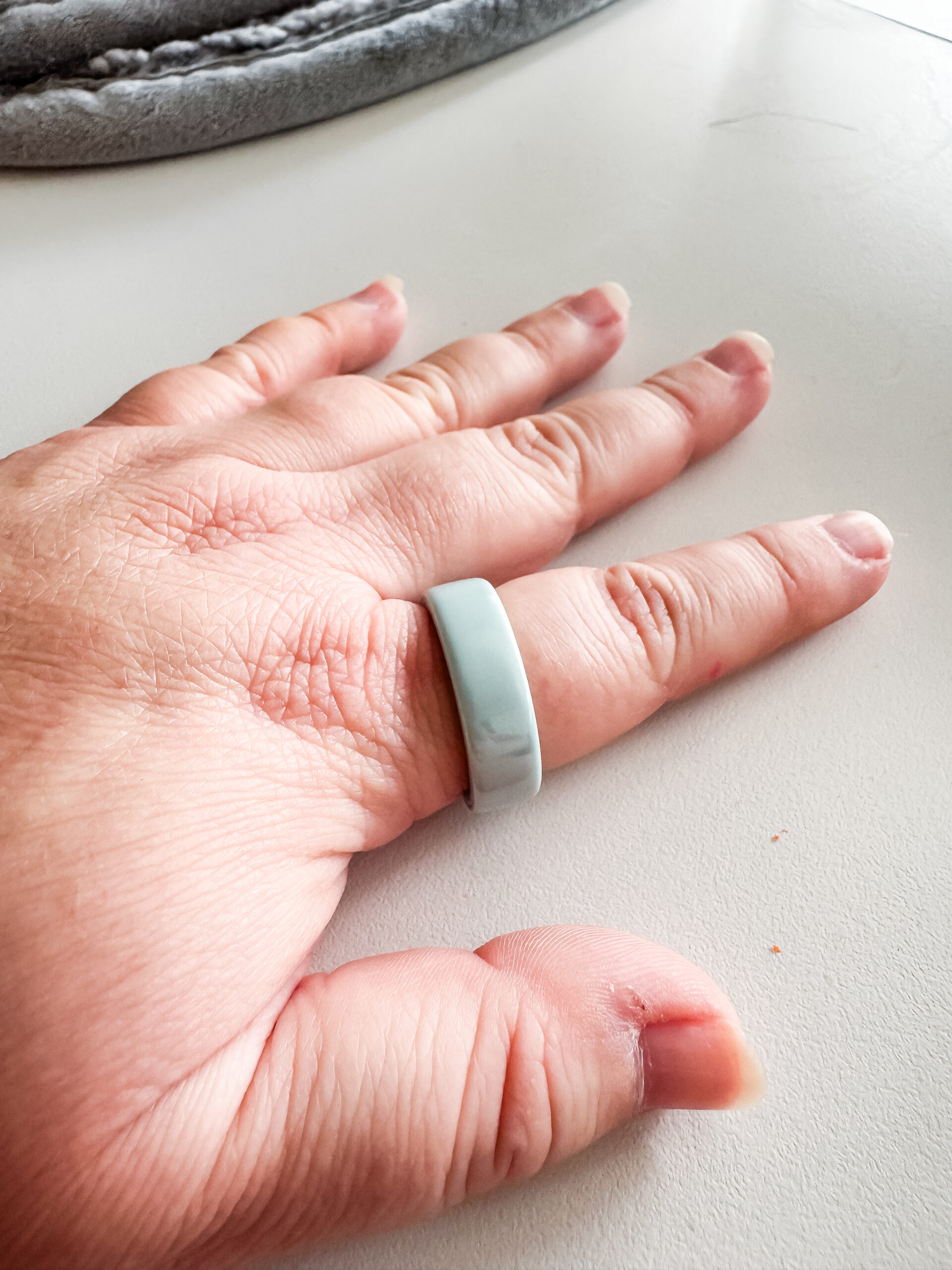
I’ve been wearing my Oura ring for four months, so I figured it was time to review it. The tl;dr is that I love my Oura ring. I barely notice it on my hand, and I really enjoy the metrics it provides me. It was a great decision for me, especially because I highly value sleep metrics and found it so clunky to sleep with my Apple Watch. This ring is so sleek that sometimes I have to check and make sure it’s still on my finger!
Why did I buy an Oura ring in the first place?
I’ve had an Apple Watch for quite a while, and I liked it a lot, but the watch always felt heavy on my wrist. (I am a delicate bird.) At some point in the day, I just wanted it off my wrist. Plus, I had to charge it for an hour or so every evening to sleep with it. That wasn’t too bad, but it could be a nuisance if I was trying to close my rings late at night.
My mom got an Oura ring earlier this year, and I loved looking at her Oura app to see her metrics. (I also liked to joke about connecting her app to my phone, just so I could see her heartbeat at all times. I am in therapy, okay?!?!) I hemmed and hawed about it, but ultimately, since I had some leftover HSA money from 2025, I decided to put it toward buying an Oura ring. I’d test it out for a few months and see how I liked it.
I was mainly curious to analyze my sleep metrics, my daily “readiness” score, and see how my stress levels fluctuate throughout the month. Plus, I figured it could be a good way to track my PsA progress and see how things like inflammation affect my overall health.
What I love about my Oura ring
There is a lot I love about my Oura ring. I find so many of the metrics useful, but especially:
- It’s unobtrusive
I’ve already talked about how unobtrusive the Oura ring is, but I want to reiterate it here because I don’t wear jewelry. I never wear rings. I only put on earrings if I remember to, and then I take them off as soon as I get home. I’ll wear necklaces from time to time, but I get annoyed with having something around my neck. Bracelets are a no-go. So I was worried about how I would adjust to wearing a ring 24/7, and a ring that’s a bit heavier than I’m used to. The first few days were weird, but I got used to it pretty quickly. (And I don’t even wear the slimmer version that came out mere months after I purchased my ring. I’m sure that one would be even better!)
- The sleep metrics have been so helpful
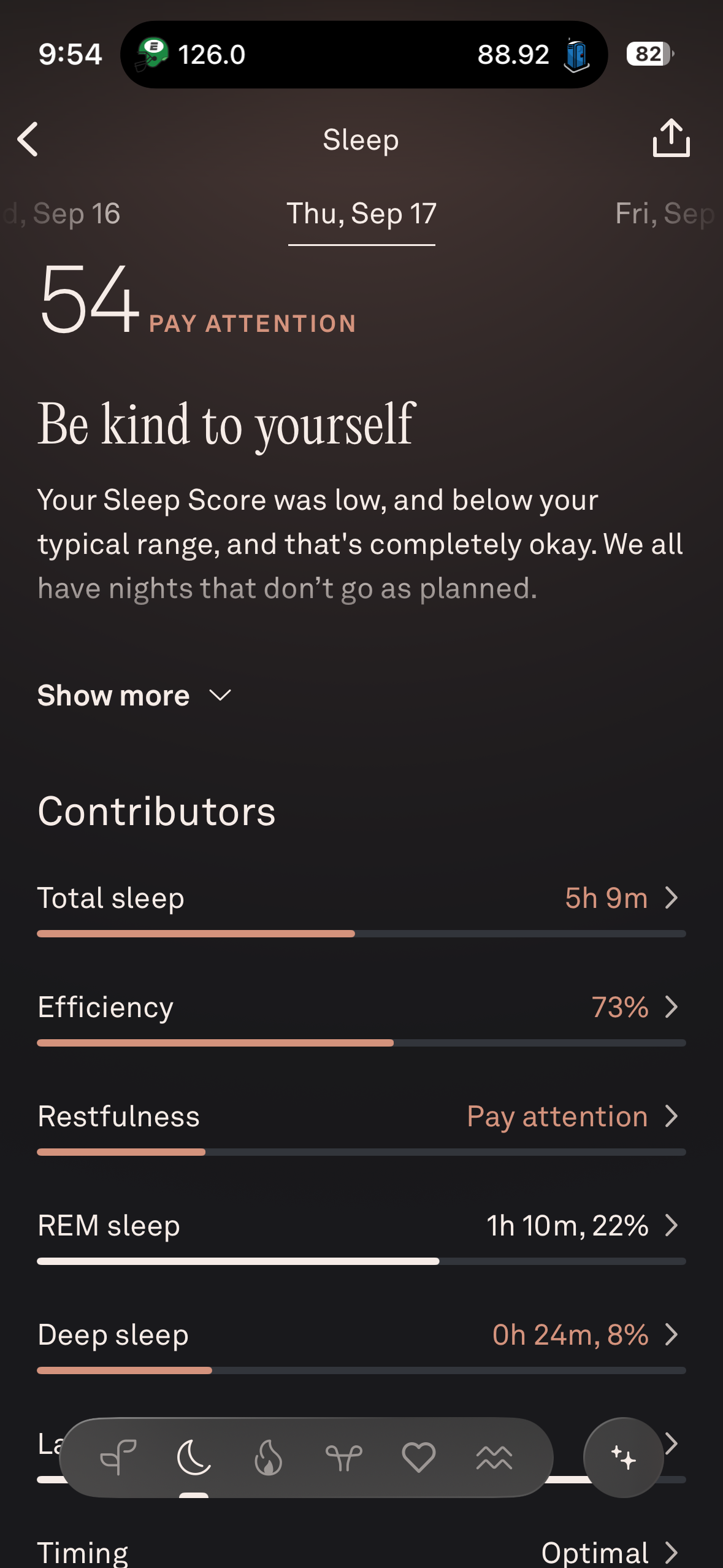
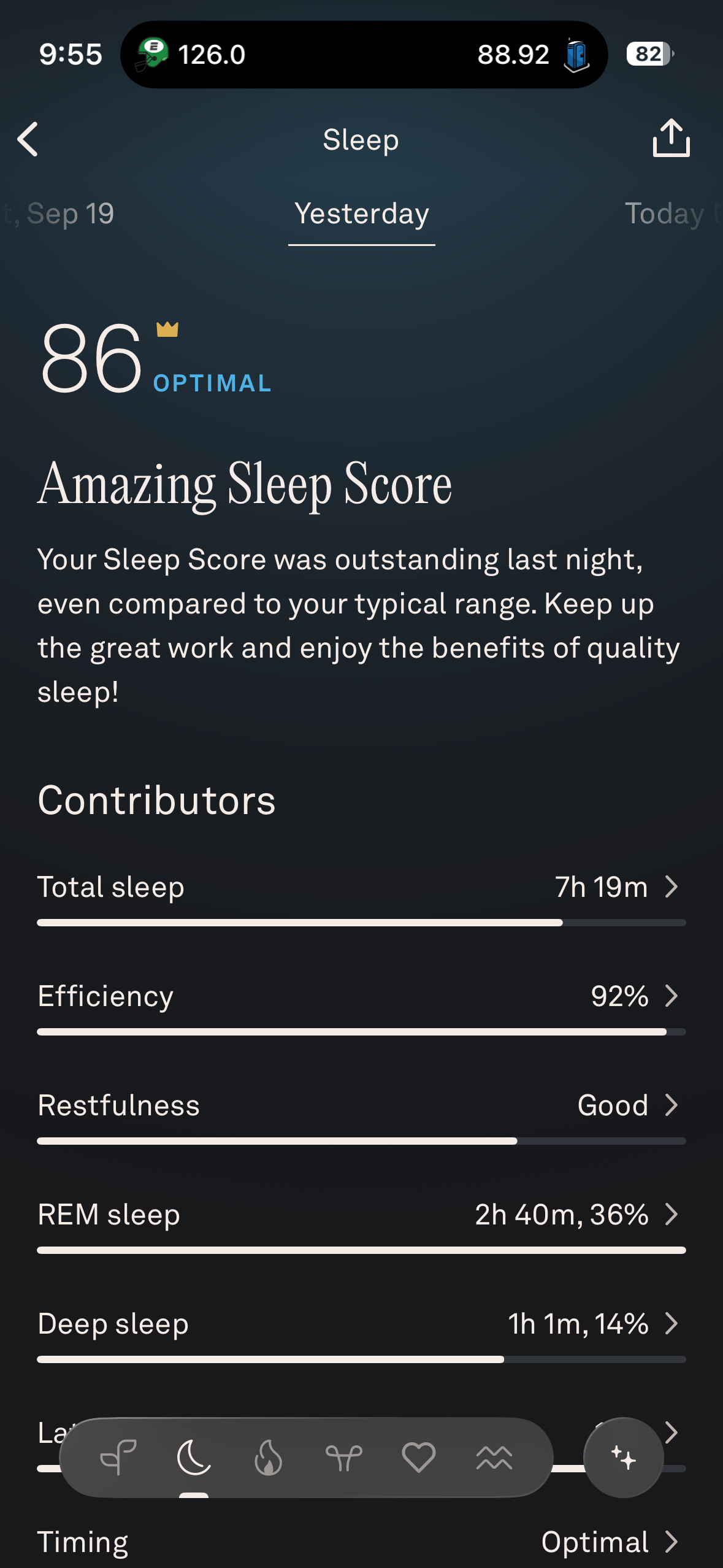
I am not sleeping well right now, so some days it’s frustrating to open my Oura app and see I slept less than 6 hours and my readiness score is in the trash. But it’s still helpful to understand what is happening to cause my terrible sleep. Sometimes, it’s because my resting heart rate never lowered throughout the night and sometimes, it’s because I didn’t wear my CPAP to bed and I had a lot of breathing disturbances. Recently, I took all my sleep data from May until now and threw it into ChatGPT to help me understand my sleep trends. It was helpful to see that a) I’m regularly getting less than 7 hours of sleep per night, b) my heart rate variability can fluctuate dramatically (and especially around my period). I also figured out that my recent dip in sleep health coincided with a recent PsA flare, so, well, there ya go! It’s going to be so helpful to have these metrics to look at long-term, especially once my PsA is more controlled.
- I love getting my daily readiness score
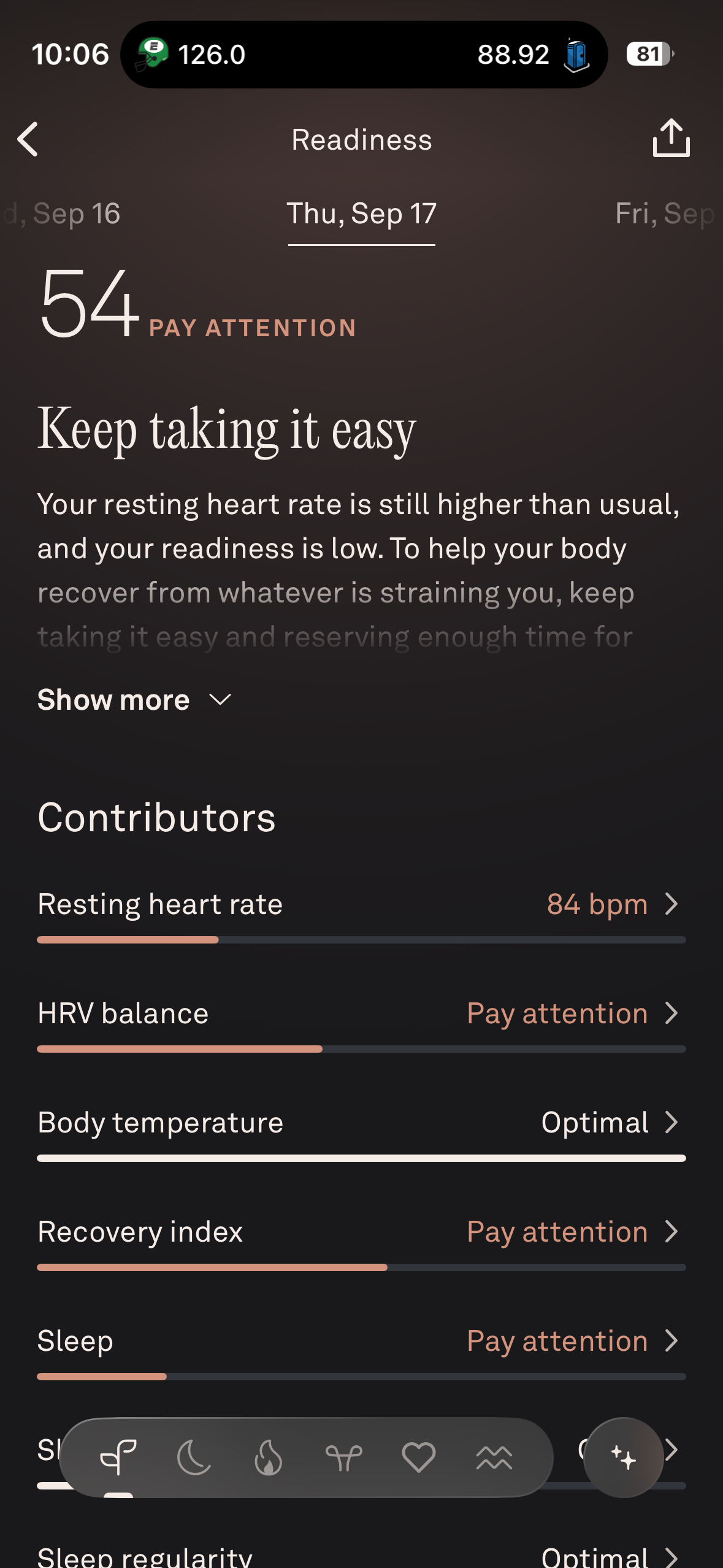
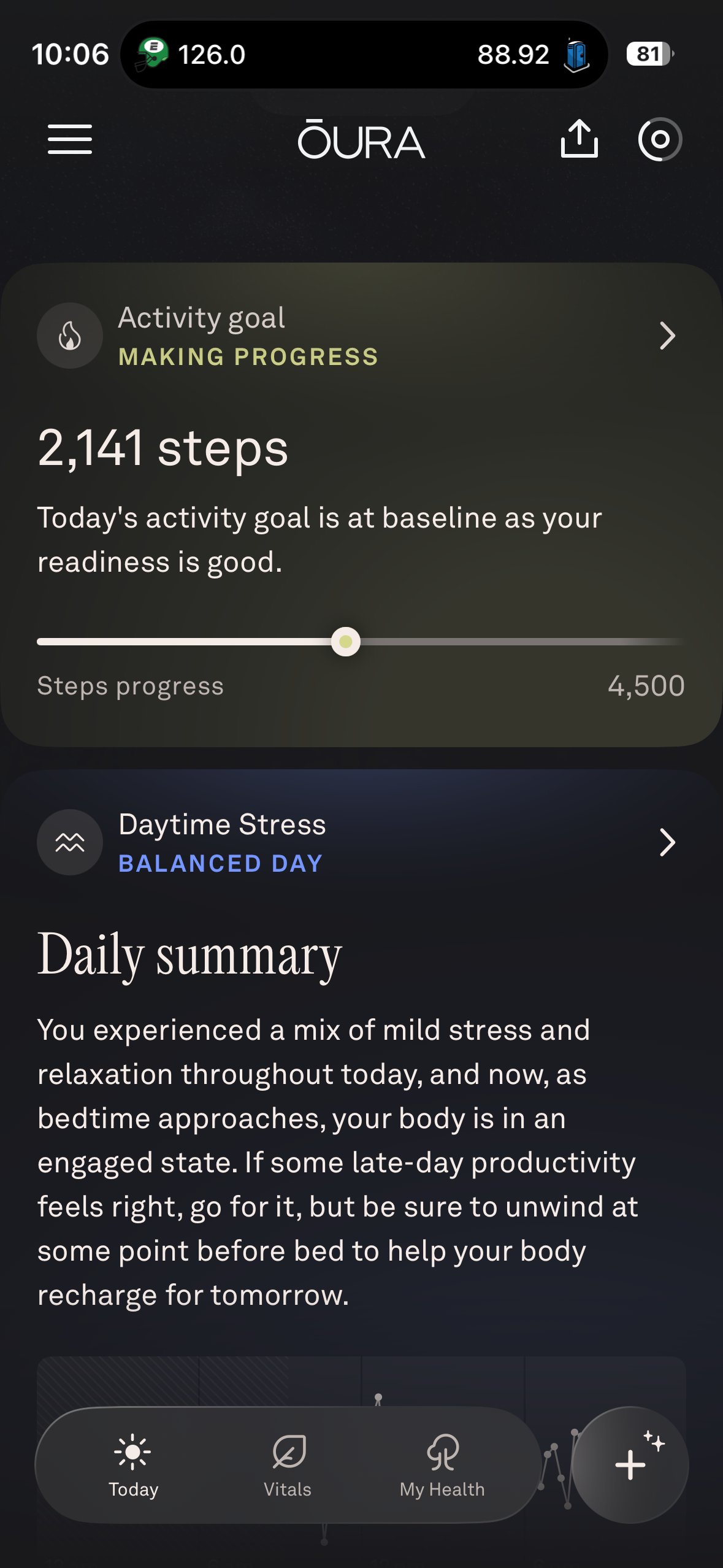
Every morning, I love opening my app to see how I slept that night and how it will affect my readiness score for the day. Oura’s readiness score combines metrics like sleep, physiological signals, and activity to show how prepared your body is for the day. It doesn’t just measure what things look like today; it compares them over time. Essentially, Oura calculates my readiness score by comparing things like how much sleep I’ve gotten over the past few weeks, how consistent my sleep/wake schedule has been, and whether my activity level was lower or higher than usual. What’s even cooler is that it adjusts my activity level based on my readiness score. So, if I’ve had some bad nights of sleep and my stress levels are higher than normal, it lowers my daily step target that day. (You can choose between two types of activity goals: active calorie burn or steps. I’ve chosen steps.) Right now, my daily target is 4,500 steps, but if my readiness is particularly low, Oura will lower the target to 2,000 or 3,000 steps.
- Cycle Insights are a fascinating discovery
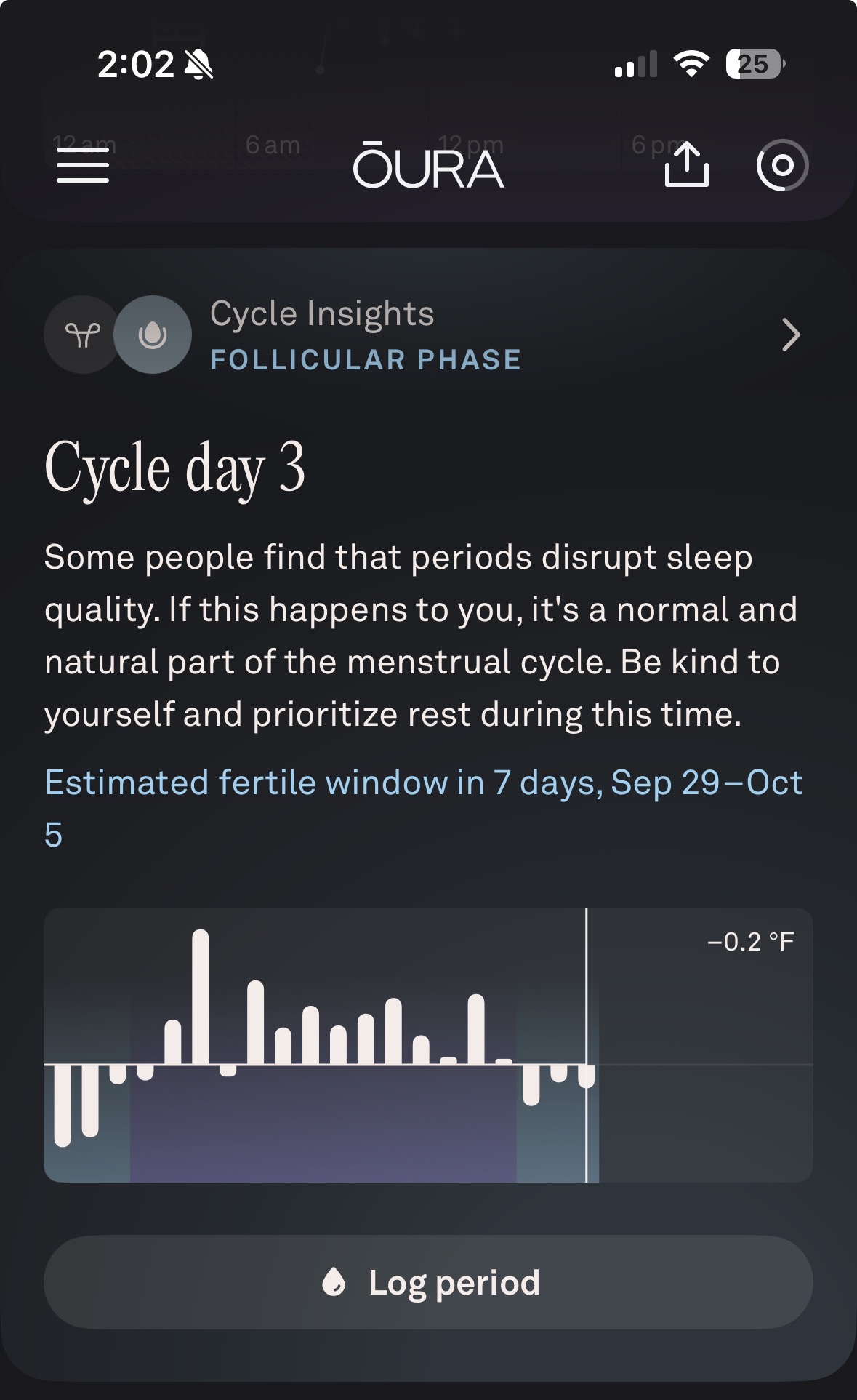
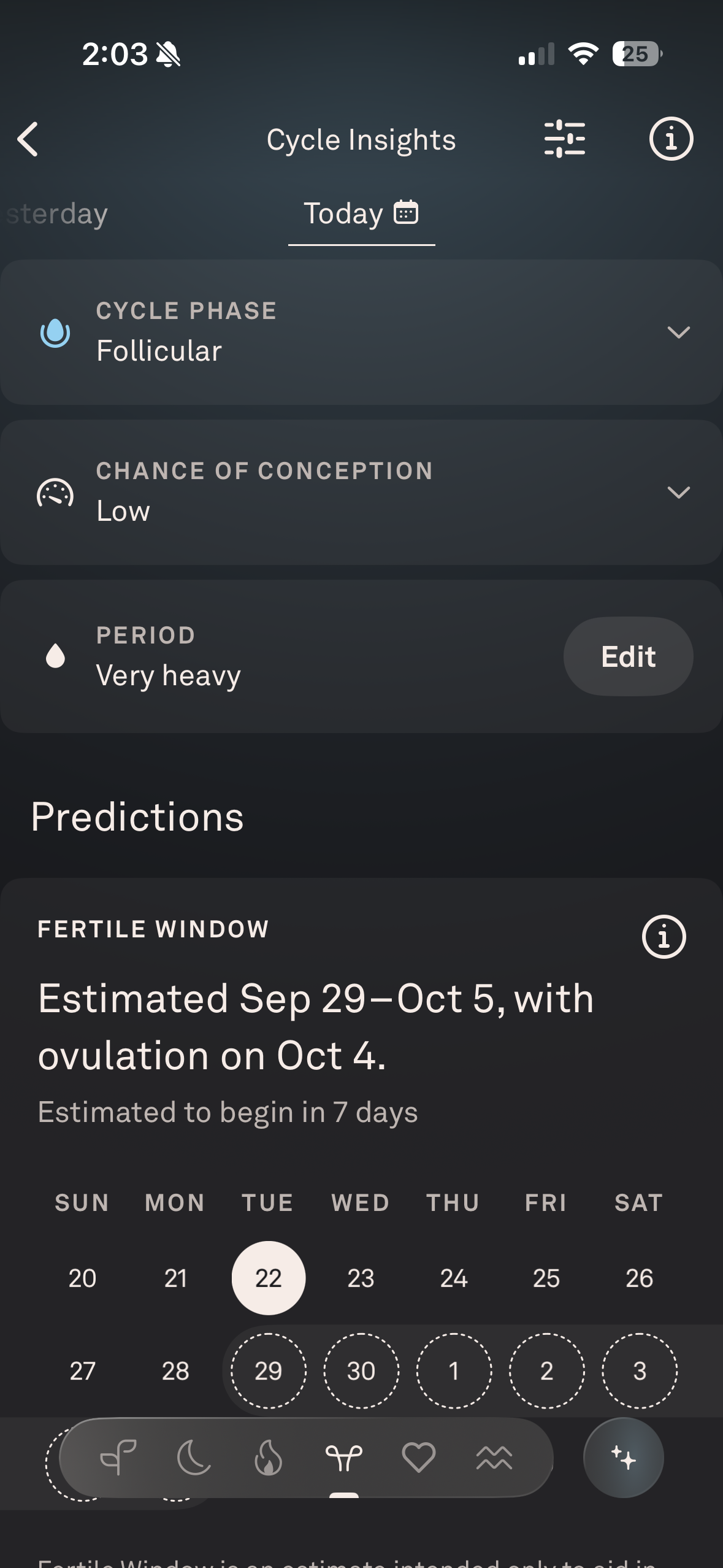
One of the things I love most about my Oura ring is Cycle Insights. This stays on my homepage, so I can see exactly what day of my cycle I’m on and what phase I’m in. It also shows a fertile window for people trying to get pregnant, which is probably very helpful. (For me, it’s more helpful to see when I’m ovulating since I know I’ll be in pain, sigh.) I like being able to see how my body temperature is affected by my cycle and how close I am to starting my period (since I always have an idea of when it will begin, but Oura makes it very clear with a red warning, “Your period will start in a few days.”). And because I’m so clued into my cycle timing, I’ve noticed that at the beginning of every period (usually day 2 or 3), Oura warns me that I’m experiencing “major signs of strain.” Logically, yes, I know this because I’m in immense pain, but there is something gratifying about seeing that it’s not all in my head. Every month, my body goes through something that causes physiological stress, and my Oura ring captures it.
What I don’t love about my Oura ring
There isn’t much I don’t love about my Oura ring. The biggest drawback for me is that it doesn’t always calculate my naps. However, I think this is because my heart rate doesn’t typically lower enough for Oura to register that I’m asleep, so it’s more of a “me” thing than an Oura issue. Still, it helps to see that, even though I thought I slept deeply during a nap, Oura isn’t counting it toward my sleep metrics or readiness score because my heart rate stayed elevated.
The other thing I don’t love is their tagging system. In the app, you can tag all sorts of things so Oura can start detecting trends in your data. Some common tags are CPAP, caffeine, cramps, massage, vacation, airplane, reading before bed, alcohol, etc. You can also add custom tags. I am still figuring out the best way to use their tags, mostly because you have to add a start and end time, which I find to be strange. I just want to tag that I used my CPAP last night, not exactly when I used it! I wish there was a way to bypass the timing for some tags, but alas. It’s also a little time-consuming to add in tags every day, so I just haven’t been doing that unless I have a particularly bad night of sleep or my stress levels are higher than normal.
I also haven’t tried out the activity aspect of Oura since I’m still not cleared for high-impact activity. It works fine for my walks and short stints on the bike at the gym, and they recently added live tracking when you start a workout. So far, it seems to work much like my Apple Watch, but once I’m back to more strenuous workouts, I’ll report back!
Do I recommend the Oura ring?
Smart trackers like the Oura ring can be complicated to recommend. Ultimately, if you enjoy analyzing your own health metrics, I would recommend the ring. If you don’t love waking up after a restful night’s sleep only to learn it might not have been as restful as you thought, you may not want a tracker like this. (I personally find that fascinating because there is so much more to sleeping/restoring your body than actual sleep!)
The Oura ring does come with a yearly membership ($80), which your FSA/HSA will cover. I don’t find that price unreasonable given how robust the app and health tracking are, but YMMV.
For me, I am most interested in understanding how my body is faring physiologically. This is important as I learn to manage a chronic autoimmune condition and as I get older and enter perimenopause at some point in the next decade. I have found the ring really useful for tracking my health metrics and understanding how different things (like a PsA flare or the first days of my period) affect my body as a whole.
Do you use any sort of tracker like this?

I’ve taken a year off of my Oura ring (which was really a hand-me-down from my husband), because my sleep stats were stressing me out a bit. But I’m starting to feel ready to jump back onto the bandwagon! My favourite part were the cycle insights. And a few times I would feel sick and then Oura would corroborate that and I felt so “seen.”
(My husband wears his ALL the time and loves it.)
I know sleep stats can be stressful to some people! Maybe I’m just so tired all the time that a bad night of sleep is “whatever” to me? HA.
I do not have an Oura ring but I have always used a running watch, which has sleep data, period data, activity data etc. However, I rarely look at the sleep or period data, and mainly use it for activities. I do like seeing how many steps/miles I have and when exercising, how my heart rate is doing. Luckily I don’t have any sleep issues (average is generally between 7-8 hours) so I don’t really look at that, but it is helpful to have if I need it!
I am so very jealous of your non-sleep issues! But then again, you are WAY more active than I am so it would be concerning if you weren’t able to sleep with how much you’re doing every day!
i’ve never been interested in rings or watches for a couple reasons- one, I think it would stress me out to wake up and have it tell me I didn’t sleep well. Or, what if I have a big day planned but I have a low readiness score? I think it would psych me out and cause me to have a bad day. The other thing is… I can’t wear anything while I’m working because you can’t give massages with a ring or watch on. So I’m assuming any data would be skewed by not wearing it for a big chunk of the day.
On the other hand… I can see how it could be helpful. Data is good! Maybe someday I’ll try it. I think I would definitely want the Oura ring rather than an Apple watch.
Oh yes, not being able to wear a ring or watch during the majority of the day would be a hindrance! I guess it would be best as something to sleep with to see how well you’re sleeping or what’s affecting your sleep. But if that stresses you out, then there’s no reason to have these kinds of trackers!
I found that wearing a sleep tracker thing actually made my sleep a whole lot worse. I would wake up several times in the night when I wore it. Slept through when I didn’t!
Whatever works!! I really do love having the data, but I know it’s not for everyone.
All those stats – sleep, “readiness,” cycle stuff, etc. – is what I love about my Garmin as well (I don’t have a problem wearing a watch). I love seeing all those stats and I found them super helpful when I was talking to my doctor about HRT.
It’s so interesting, I was JUST writing a post about the amount of jewelry I wear every day, else I feel naked. Just like we are often book opposites, we are jewelry opposites! I wear SO MUCH all the time. When I was 15 a boy told me I wore more jewelry than Mr T, and I took that to heart. It’s my esthetic, Mr T. Anyway, I sleep with my watch, I never take off my wedding and anniversary ring, and I keep my sleeper hoop earrings and double studs in all the time. Isn’t it fun how we can be different and still be great friends! I love that.
I really wish I loved wearing jewelry! I need to try sleeper earrings, though. I find sleeping with earrings to be so uncomfortable!
Garmin has some stats that Oura doesn’t offer, so I’m just holding out hope they’ll get them in due time, hehe.
This was fascinating to read! I have gone back and forth about wanting an oura ring. I think it would be super interesting, but I also worry I would obsess over the data!
I find myself very fascinated but not obsessive about the data, which is a good combination, I think. I don’t think I could wear any sort of health tracker if I got too obsessive, but I definitely understand.
That was a great review! I have an Apple Watch, and I turned the sleep data off because it stressed me out. I use it for exercise/steps, and it reminds me to stand up every hour, which can be annoying! And it tells me the time! Ha! Ha! The Oura ring sounds cool because it makes you feel seen and validated, and that would be really nice. It’s great that it doesn’t bother you while wearing it.
Ooh, I do miss the standing reminders from my Apple watch! Although sometimes I would stand and walk around for 5 minutes and it wouldn’t record anything, which was really annoying. I was once walking around my apartment for 10 minutes trying to get that final stand tally mark to close all my rings, and I was on the phone with my mom at the time, and she was like, “I mean, you DID close your rings even if your watch didn’t say so…” And I mean… yes. She is right. HA. Funny how we can get obsessive about things!
Well, as you probably know I am a data nerd (give me ALL THE STATS) and I actually looked into an Oura Ring before, but since I got my new Garmin, I don’t need a ring anymore… my Garmin gives me all these stats and more and the best part is that the battery life is so much better than that of the Apple Watch (like 10+days!).
I love how it can fine-tune training load for me and I definitely pay attention to my sleep score.
I am super-happy to hear that the Oura ring is so insightful for you!
Holy cow! A 10-day battery life for a smart watch is insane! I can usually go about a week between charges with my Oura ring, so I do love that it’s not an everyday thing (and it gives me a warning when I’m about 20-22 hours away from needing to charge it so it doesn’t come out of nowhere).
I ahne my AppleWatch and I love it. The Oura ring honestly doesn’t interest me too much. It seems like everything you mentioned can be tracked with the Apple Watch as well. And yes, it felt a bit weird sleeping with my watch at first but now I don’t care.
I used to look at my sleep data the minute I was up but I actually stopped that. And realized I sleep better when I don’t obsess about it.
Yes, the Apple Watch and Oura ring are comparable in what they track. I believe the Oura ring is a bit more accurate when it comes to sleep/health metrics while the Apple Watch is much better for exercise/activity tracking. So it just depends on what you are looking for!
I am so glad you love your Oura ring! I have had one for about 1.5 years, I think, and I love it. I always wear my Apple Watch, too, as I use it as an alarm since I can set it to vibrate to wake me so Phil can keep sleeping. But the oura seems to have more accurate sleep data. I love that it can detect between when I am reading in bed and when I am sleeping. My Apple Watch cannot. I also like the symptom radar and the readiness score. I don’t get in my head too much about it or I try not to. If have more than 2 glasses of wine (which is rare for me) it shows up in my sleep and readiness data.
I do wish I had the newer, lower profile version of the ring. It does feel a little bit clunky on me. But I have TINY fingers. I should see if they have a trade in deal at some point as I think I should size down. Just tonight I thought I lost my oura ring when I was using the bathroom at the airport. I wish it made a sound when you are searching for it. Somehow it had fallen off my finger when I put something in my backpack. But I had 5 minutes of panicking until I figured it out!!
You should definitely try to trade in for the newer Oura ring! I would definitely like it less if it felt clunky/cumbersome on me.